Real-Time Components
How can we simulate very large models in real time? This was the objective of our research project, ‘Real-Time Components’. We developed new techniques that enable us to simulate differential equations with a 1 ms step size without causing instabilities.
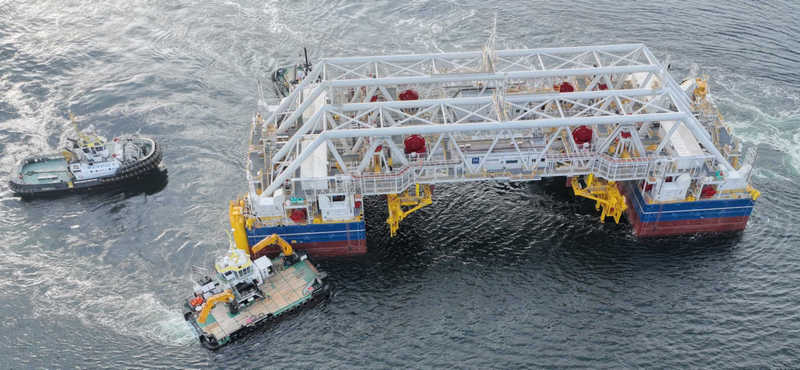
In large simulation models, such as the immersion pontoon shown in the picture, it is crucial that all components of the model remain stable at this timescale. This is not always possible. For example, nonlinear equations and interconnected flow lines in hydraulic circuits often lead to component models requiring microsecond simulation steps. For the immersion pontoon, this meant that the full model was too slow to be used in a training simulator.
In our research project, we found alternative ways to describe differential equations for several classes of components. Essentially we removed the high-frequency effects while staying within the accepted bounds of accuracy. Thanks to the results of this project, we can now simulate very large models effectively in real time.
This approach has been successfully applied this to the immersion pontoon model which is now being used for HIL-simulation and operator training.