
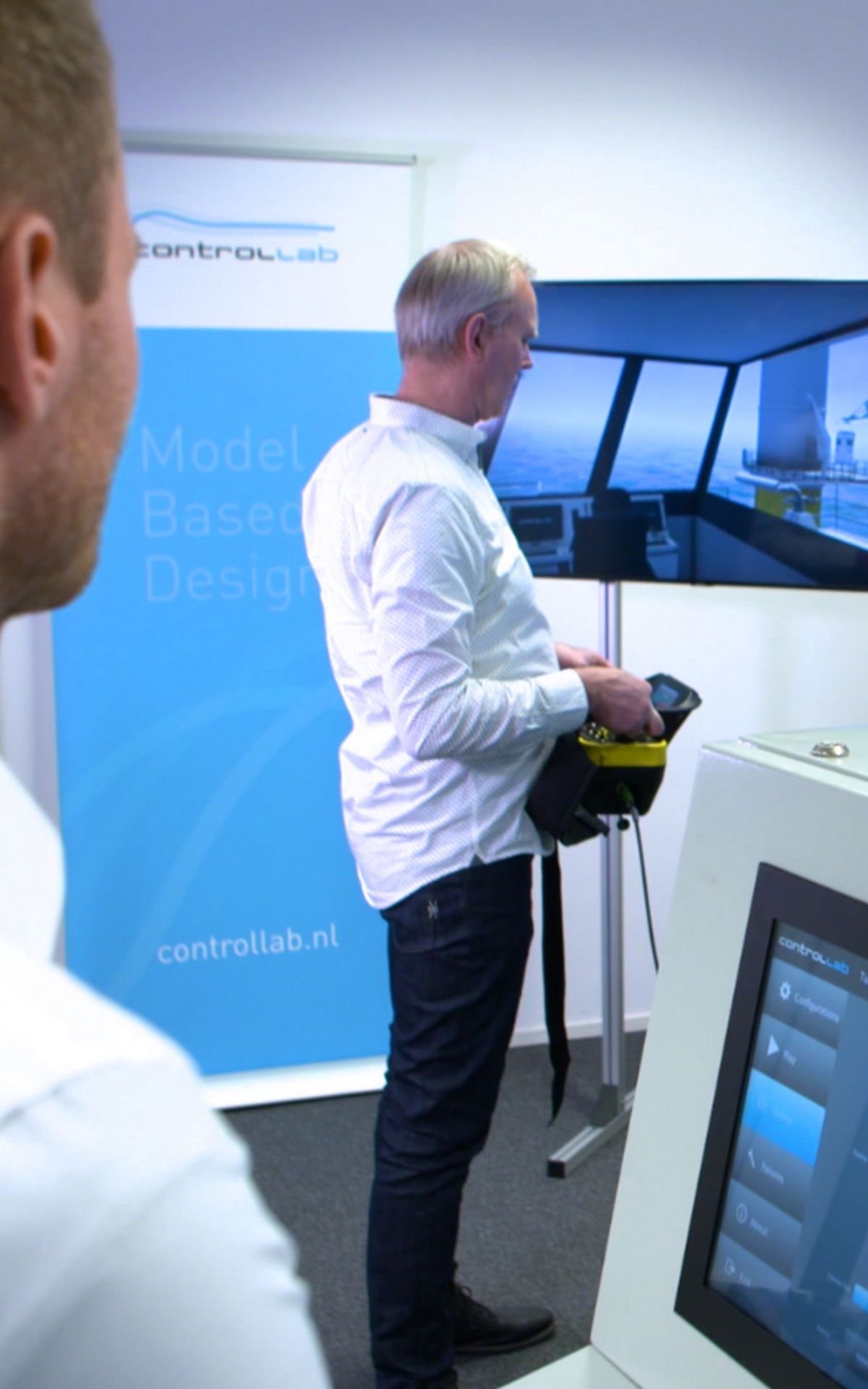
Digital Twins
A digital twin is a virtual replica of a real machine, a simulation model that accurately reflects its real-world counterpart. It is a modern term for a simulation model that mimics its real-world counterpart very accurately. If we provide a simulation model with the same inputs as a real machine, we expect its behaviour to mirror that of the real machine. At Controllab we focus on dynamical systems models. These models describe how machines move, the forces that occur during motion and the level of accuracy that can be achieved.
Bond Graphs
We create our models using the lumped parameter approach. This means that all the physical properties of a system are discretised at specific points. For example the density and of a material is modelled as mass and inertia at a certain point (the centre of mass) and the elasticity is modelled as stiffness at another point (the centre of compliance).
All of our models are based on power flow. Each component of a model has physical connections with other components and these connections are described by the exchange of power. This type of modelling is known as bond graph modelling. It is a powerful modelling technique for creating highly accurate models.
20-sim
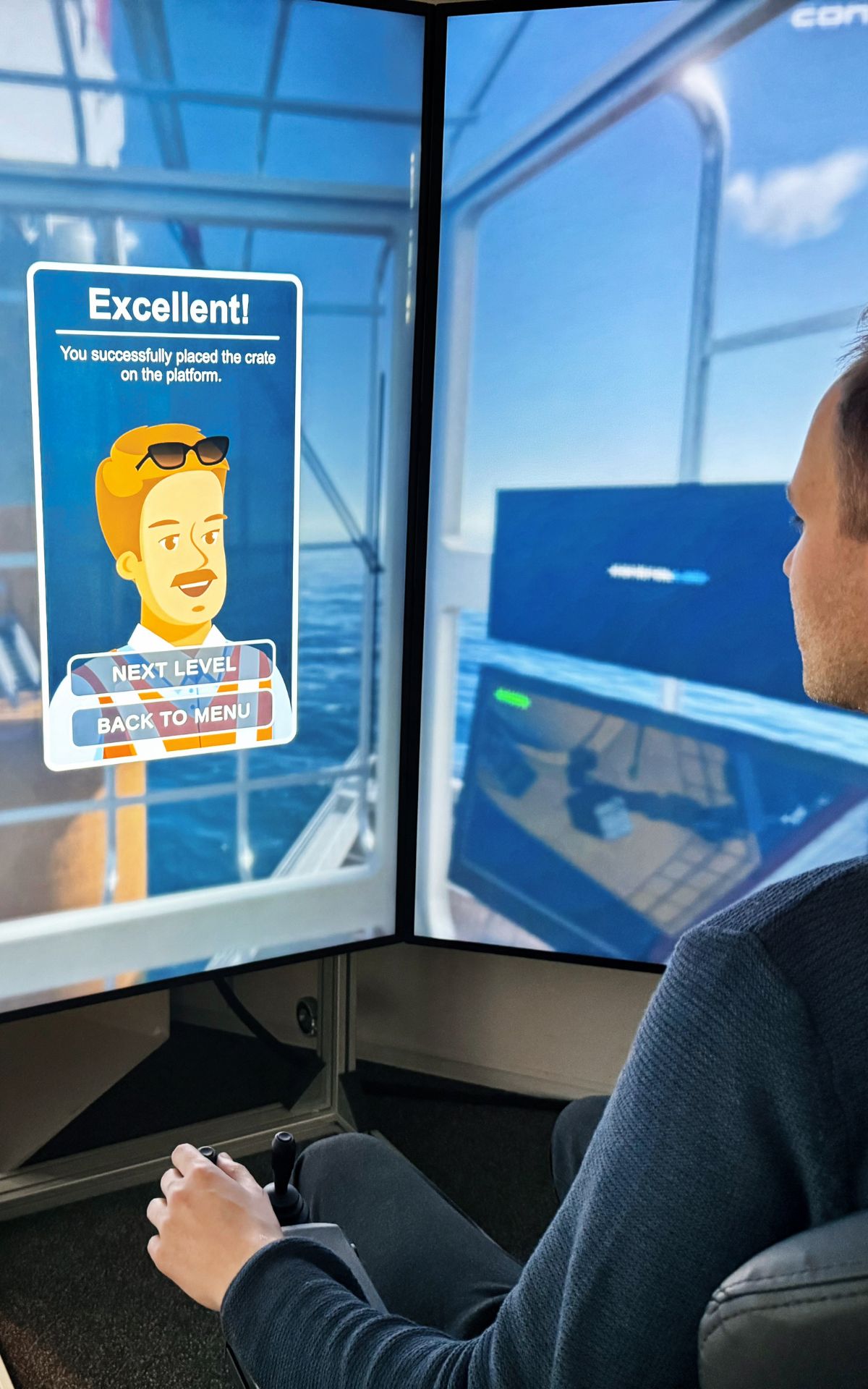
At Controllab we ave developed our own simulation software package 20-sim. 20-sim enables the creation of models by selecting components from a model library and couple them to represent a machine. Under the hood, the bond graph technique is used to create fast and accurate simulation models. Simulations results in 20-sim can be displayed as plots and coupled with the Unity software package to create high-quality realistic 3D animations.